Historical & Regional Background
Heritage & Significance
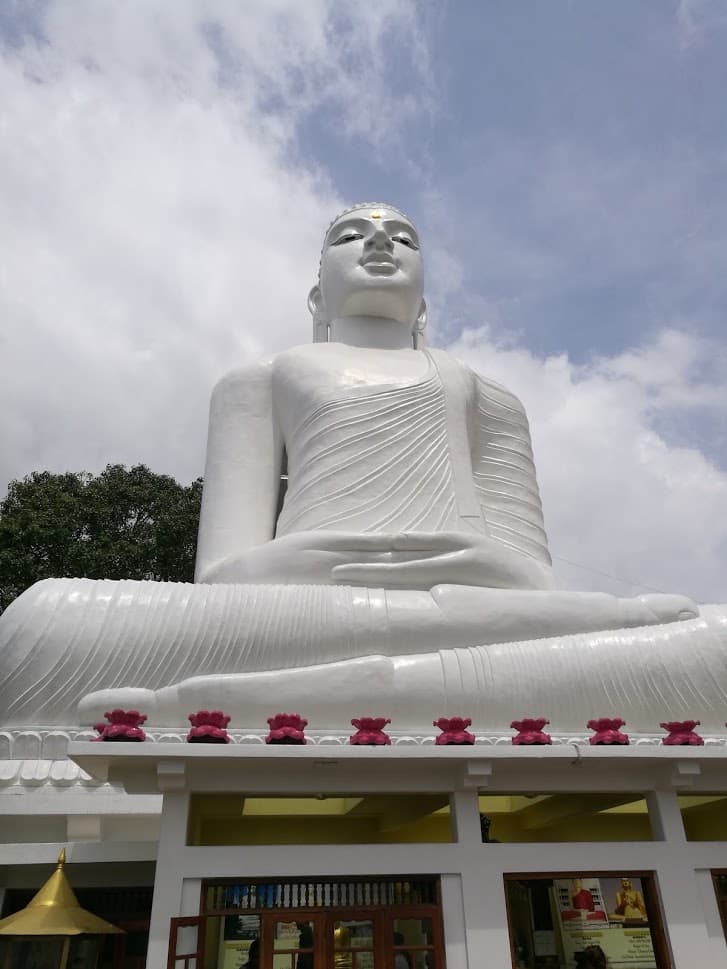
Perched on the steep slopes of the Bahirawakanda hill, the Sri Maha Bodhi Vihara is home to one of the most visible landmarks in the city: a towering, 88-foot-tall white Buddha statue.
Perched on the steep slopes of the Bahirawakanda hill, the Sri Maha Bodhi Vihara is home to one of the most visible landmarks in the city: a...
Organized exploration insights for your Sri Lankan journey
Dusk & sunset (5:30 PM – 7:00 PM) when the giant white statue is dramatically illuminated.
Perched on the steep slopes of the Bahirawakanda hill, the Sri Maha Bodhi Vihara is home to one of the most visible landmarks in the city: a towering, 88-foot-tall white Buddha statue.
Sculpted in the traditional Dhyana Mudra (the posture of deep meditation), this massive monument was completed in the early 1990s and stands as one of the tallest seated Buddha statues in Sri Lanka.
The hill itself, known as Bahirawakanda (Gnome Mountain), has a fascinating history rooted in local folklore. In ancient times, locals believed the hill was inhabited by a powerful earth demon, and legends suggest that human sacrifices were once offered here to appease the spirit and protect the kingdom from bad luck. Today, the giant white Buddha statue has completely transformed the hill into a peaceful place of spiritual sanctuary.
The temple can be reached by a short drive up a winding road or via a flight of stairs starting from the city center. Visitors must remove their shoes at the entrance before walking onto the smooth stone viewing terrace at the base of the statue. A set of stairs built behind the Buddha allows travelers to climb up to a viewing platform near the statue's shoulders. From this high vantage point, you can enjoy a bird's-eye view across Kandy, looking down over the lake, the Temple of the Tooth, the crowded marketplace, and the distant, mist-covered peaks of the Knuckles Mountain Range. The site is particularly magical at dusk when the statue is illuminated by soft spotlights and the sound of evening prayers echoes from the valley below.
Wear clothing that covers shoulders and knees. White or light-colored attire is traditional when visiting Buddhist shrines.
Remove shoes and hats before entering temple grounds. Carry socks during sunny midday hours as stone courtyards can heat up.
Do not pose with your back turned directly toward Buddha statues. Always ask permission before photographing monks or devotees.
Early mornings and evening Puja ceremonies offer the most evocative atmosphere with chanting, drumming, and oil lamps.
Coordinates: 7.2952°N, 80.6276°E
Contact our travel experts to craft a personalized itinerary featuring this experience.
Inquire Now